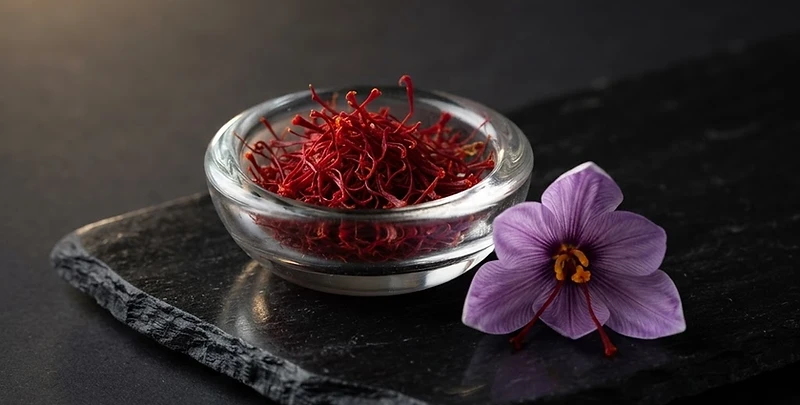
I · What saffron is
The dried stigmas of one autumn flower.
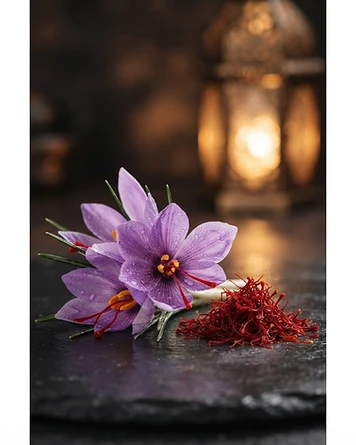
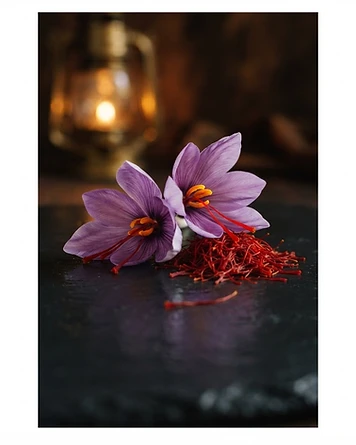
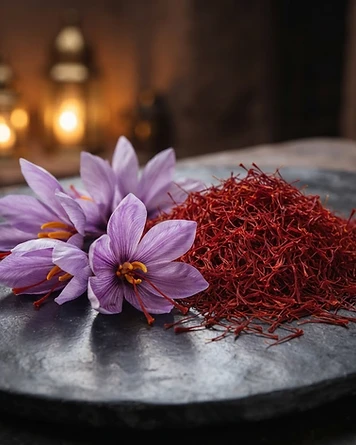
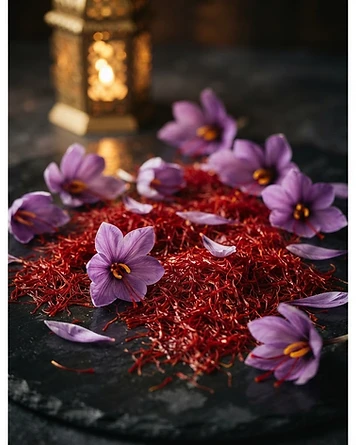
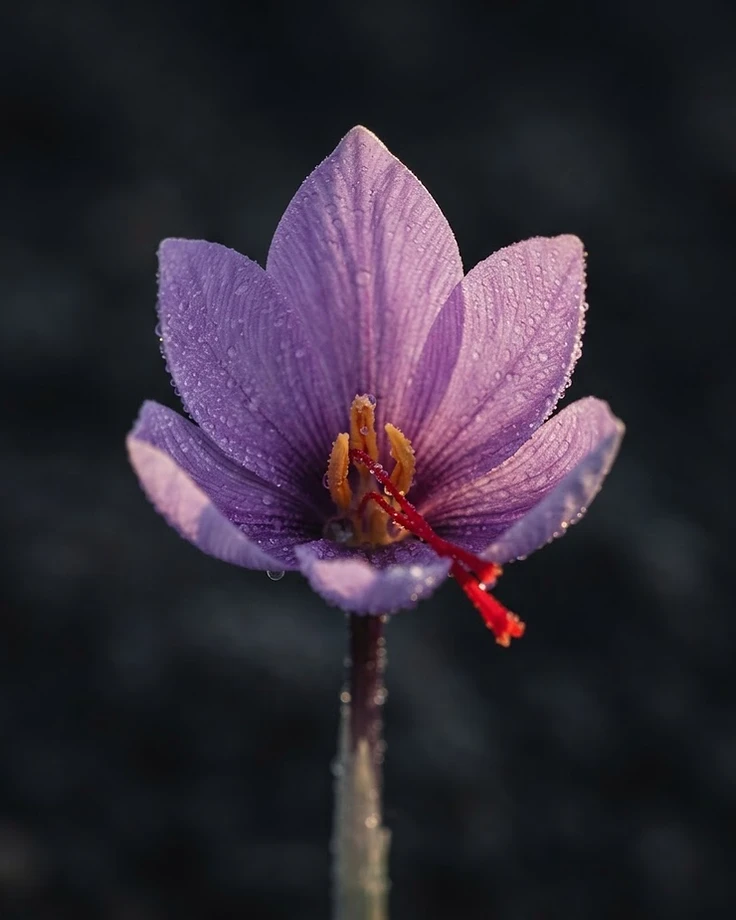
Saffron is the dried stigma of Crocus sativus, a small crocus that flowers for two or three weeks each autumn. Every flower holds three crimson stigmas. They are separated by hand and dried gently, and that is the whole of the spice: no other part of the plant is used.
The plant is sterile, so it is grown from corms rather than seed. Nothing about the harvest can be mechanised. The flowers open at dawn and fade within days, which is why picking, separating and drying happen quickly, in the same short season.
It is sold by weight in very small quantities, because a field yields grams rather than kilograms of finished threads. That scarcity, more than any mystery, is what makes saffron expensive.
- 3
- Stigmas per flower
- ~150
- Flowers per gram
- Autumn
- Flowering season
- By hand
- Picked and separated
II · How it grows
Planted once, harvested every autumn.

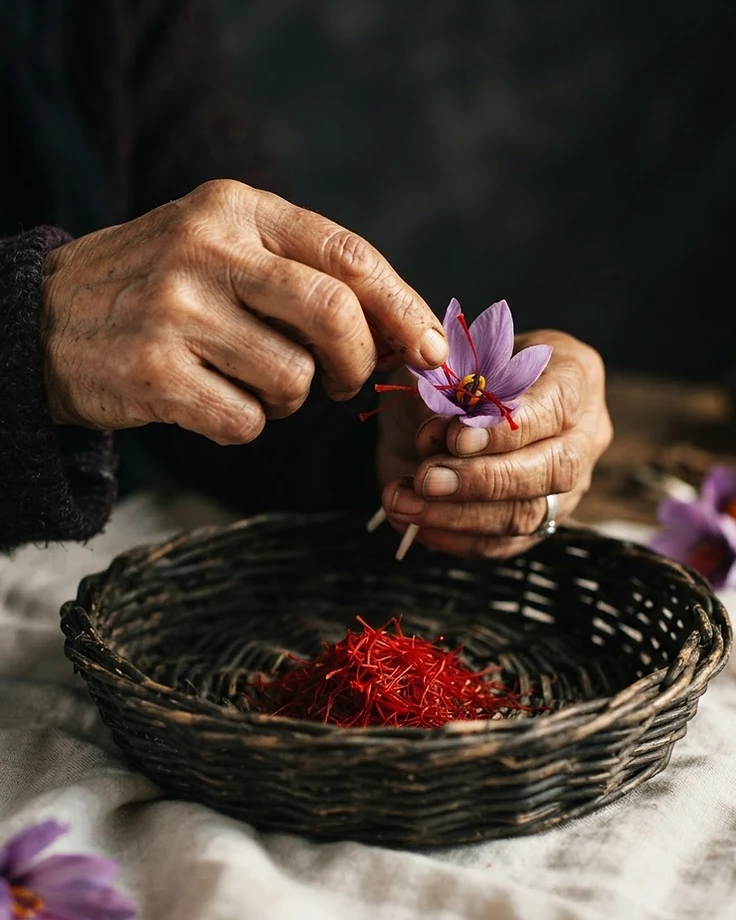
Separating the stigmas from the petals, by hand
- 01
- Corms are planted while the ground is dry and the plant is dormant. A bed is lifted and divided every few years, and the daughter corms are replanted.
- 02
- Flowering starts with the first cool nights of autumn. A field can come into flower within days, and the whole crop ripens at once.
- 03
- Flowers are gathered by hand at first light, before the day warms and the petals open fully. A picker works slowly, flower by flower.
- 04
- The three stigmas are removed from each flower the same day and dried gently, then rested in sealed containers before they are packed.
The corm
The bloom
The picking
Separation and drying
A good harvest yields roughly one gram of dried threads for every 150 flowers picked. That ratio, not the price tag, is the honest measure of what saffron costs to produce.
III · Colour, taste and aroma
Three compounds explain the whole spice.
Saffron's character comes down to three groups of compounds held in the stigma. They are also what a laboratory measures when it grades a lot, which is why the next two sections come back to them.
01
Colour
Crocin
A water-soluble carotenoid that gives saffron its deep gold. It is why a pinch colours a whole pot of rice, and why a jar left in sunlight fades.
02
Flavour
Picrocrocin
A bitter glycoside responsible for the taste saffron gives a dish. It breaks down into safranal as the spice ages, is heated, or is stored badly.
03
Aroma
Safranal
The volatile compound behind saffron's honeyed, hay-like scent. It is released when threads are warmed or bloomed in liquid, and it is the first thing an open jar loses.
Drying, heat and storage all shift the balance between them. A sealed jar kept dark holds its colour and aroma; an open one loses safranal first, and with it much of the smell.
IV · Buying and keeping
How to judge a jar, and how to keep it.
Saffron is one of the most imitated spices in the world. Almost everything useful can be checked with your eyes and your nose, in the shop, before you pay.
When you buy
- Whole threads rather than powder. Powder is easily stretched with turmeric, paprika or dyed matter, and impossible to judge by eye.
- Deep crimson threads with no yellow styles attached. Safflower and dyed substitutes look red at a glance, not up close.
- A honeyed, hay-like scent when the threads are warmed in your palm. A musty or oily smell is a warning.
- Packaging that keeps light out: a sealed tin or dark glass rather than a clear bag on a sunny shelf.
- A named origin and a stated weight. Vague wording tells you nothing about what is in the jar.
When you keep
- Airtight, so the volatile oils stay in the jar rather than in the cupboard.
- Dark, away from a window and away from the stove.
- Cool and dry: a cupboard, not the fridge door.
- Away from strong-smelling spices, which saffron picks up.
- About a year at its best. Buy a weight you will actually use.
V · In the kitchen
Bloom it, then use a light hand.
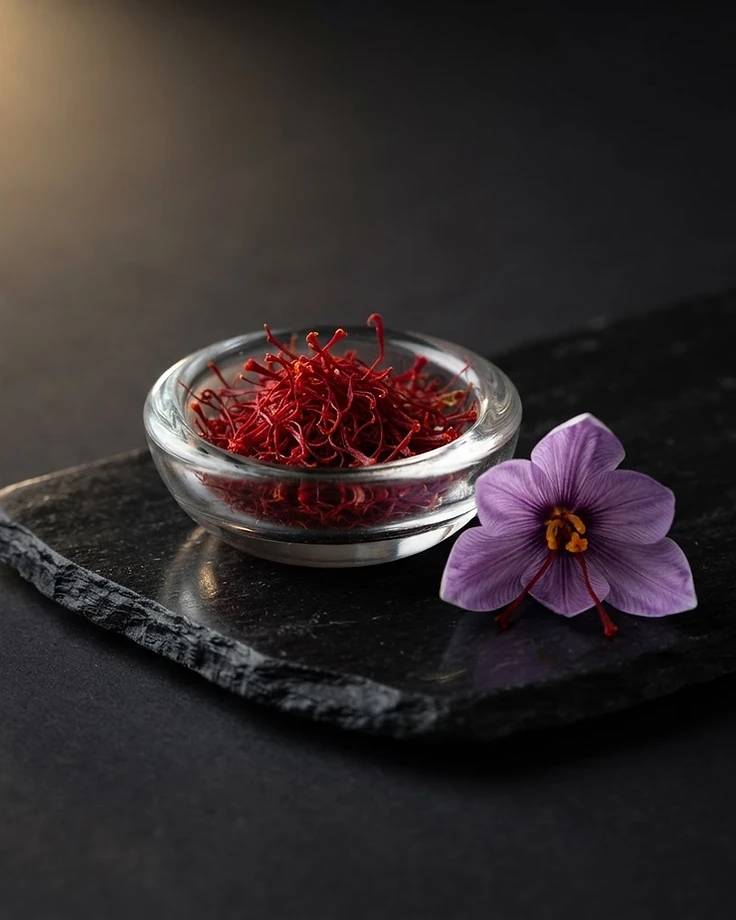
Saffron gives up its colour and aroma to liquid, not to dry heat. Blooming it first spreads both evenly through a dish.

- 01
Bloom it
Crush a pinch of threads between your fingers and steep them in two or three tablespoons of warm, not boiling, water, stock or milk for 15 to 20 minutes.
- 02
Count threads, not teaspoons
Ten to fifteen threads will perfume rice for four people. Beyond that it turns bitter rather than richer.
- 03
Add it late
Stir the bloomed liquid in toward the end of cooking, or fold it through rice as it rests, so the aroma stays bright instead of cooking away.
Rice and pilau
Afghan qabili palau, Persian tahchin, Italian risotto and Spanish paella all take saffron through the cooking liquid.
Braises and stews
A little bloomed saffron lifts lamb, chicken and vegetable stews without dominating them.
Sweets and custards
Indian kheer, rice pudding and Scandinavian lussekatter use saffron as much for colour as for flavour.
Tea and milk
A few threads steeped in warm water or milk with honey makes a simple saffron drink.
Traditional uses only. We make no health claims for saffron.
VI · Quality classifications
What a grade can, and cannot, tell you.
Saffron is graded by measuring the three compounds above. The ISO 3632 method sets out how a sample is prepared and measured, and groups the result into categories, with category I at the top of the scale.
Trade terms are shorthand for those categories. “Grade A” generally refers to the top category. It describes measured quality; it is not a licence or a certification issued by an authority.
A grade also describes one sample, at one time. To mean anything about the jar in your hand, the measurement has to have been made on the lot that jar came from, by a laboratory, and the report has to exist somewhere you can read it.
Grade A designation provided by our supplier. Independent laboratory verification is pending. No Canadian certification or independent grade verification is claimed.
The collection